This apology is a really big deal.
Thank you, Mr. Chambers, for having the integrity to _not_ play the oppressive, manipulative "we've always believed this way" card popular among accountability-avoidant PR departments. Thank you for making efforts over the last year to shed or distance yourself from the disingenuous and serpentine wordcrafting popular among certain of your peers.
I don't have any illusion that Chambers is moving towards embracing same-sex relationships as a spiritually ideal, Biblically approved option, and I still disagree with some fundamentals of his views, but I very much respect his persistent efforts to build his organization's integrity despite some very harsh criticism from those who have been his associates and fellows.
I heard him speak at a conference in Salt Lake almost 7 years ago now, and his rhetoric and tone seem to have shifted towards greater authenticity and frankness since then. He recently had the courage to admit, after years of evasive wording about "change", that few if any people actually change their orientation, at least not to the point of eradicating same-sex attractions. I believe many stick with the "change" angle with the intent to offer possibly life-saving hope for another way a few seeking souls may not have considered, downplaying or omitting the phenomenon of persisting same-sex attraction as irrelevant to their success in living according to their religious paths. But it's not irrelevant when heroes and careers are made or broken by a standard that was more slick marketing than human reality, or when an intensely conflicted young gay man can't understand why he hasn't had enough faith or put in enough effort to achieve what so many supposedly have, and he feels like a failure or loses all hope for happiness as he perceives it. Chambers' admission was not a hair-splitting, nit-picking quibble that cowed to some "gay agenda": it's a paradigm-shifting, potentially life-saving truth. He also announced Exodus would be dropping sexual orientation change efforts as a focus of their ministry, either de facto or explicit.
He isn't changing his personal, religious beliefs, as far as I can tell, and he may well intend for all of this to better position him and others to coach those desiring paths they believe to be Biblically congruent. Nonetheless, he offers many vulnerable apologies to a wounded and potentially unforgiving audience, such as the following:
"I am sorry that some of you spent years working through the shame and guilt you felt when your attractions didn’t change. I am sorry we promoted sexual orientation change efforts and reparative theories about sexual orientation that stigmatized parents. I am sorry that there were times I didn’t stand up to people publicly 'on my side' who called you names like sodomite—or worse...
"I am sorry that when I celebrated a person coming to Christ and surrendering their sexuality to Him that I callously celebrated the end of relationships that broke your heart. I am sorry that I have communicated that you and your families are less than me and mine...
"And then there is the trauma that I have caused. There were several years that I conveniently omitted my ongoing same-sex attractions..."
Those, I believe, are the words of someone who knows what it means to be a true man.
Showing posts with label Therapy of Homosexuality. Show all posts
Showing posts with label Therapy of Homosexuality. Show all posts
20 June 2013

12 October 2011
Conversion therapy's elusive unicorn
From Facebook:
----------------------
In response to comments in a previous post, this describes my experience and perspective well.
O-Mo Whatever the cause of homosexuality/same-sex attractions, whatever the life choices, and whatever the malleability or future possibilities of change through therapy techniques and neuroscience yet to be discovered, the reality of _today_, as I see it, is that people do not change from mostly same-sex attracted/gay to mostly opposite-sex attracted/straight. Some claim to have changed but later recant, and a few have staked their income and reputation in the claim and persist in it. But when pressed, I have found more wordsmithing and perspective reframing for functional/behavioral change or cognitive adjustment than actual change in attractions. Still, I don't believe this should be used as ammunition to shoot down someone's personal, honest, carefully considered direction for their life in congruence with their beliefs, values, desires, and goals.
Guy1 People make this so damn complicated.... :-P for me it all boils down to what gets you off. ;) I've never had a conflict of faith and sexuality, of course, so I don't really understand the intricacies involved...to me, it seems like a simple no-brainer.
O-Mo Afterthought: While my observation matches his, I would not say, as he does, that "none of this can occur with homosexuality" with a more accurate, "I have never seen it occur."
Gal1 I agree... This brings up some very intruguing differences between attraction and behavior. Attraction - well, there's no need to "repent" of that, since it's something you can't change. Behavior, however, is something you are always accountable for. People will try to reason their way out of a lot of things, but ultimately you are the one in control of your actions.
I also like the point made toward the end of the article, that it is possible to be in love with someone you are not sexually attracted to. It's an interesting thought, in a culture that overexaggerates the importance of sexuality. When it really comes down to it, there is SO much more to love, true love anyway. If it's just sexuality involved, that is lust. Big difference.
O-Mo Yeah, Guy1, I've run into that same confusion with others who either were not raised in a homosexuality-shunning church or left at an early age. I don't know how to convey it. But even without religious conflicts, I've known some to struggle with what they really want.
Guy2 This is some good stuff O-Mo. I've actually had a lot of these thoughts on my mind the past few days. I have found so much peace and happiness finally in my life doing exactly what I have always been taught was wrong. Letting go of that "battle" between good and evil and just following what I feel is right in my heart has been such a blessing for me.
Guy1 I grew up in small-town mid-america. I never knew what gay was until I got online at the age of 15... I always knew what I found attractive, though. Perhaps it was because I grew up with such a streak of individuality that being gay never really bothered me, even though family and friends spoke ill of it once it started hitting popular culture. My mom tried to get me to go to church and her side of the family is pretty religious, but it never stuck with me. I only went for the grape juice and crackers. I was never able to think of any of the stories as literal...they just seemed like good stories and I enjoyed reading all sorts of books back then.
I was certainly a prude throughout my teen years and the first couple of college, but that wasn't because I thought I should be with girls! :) They never did anything for me...
O-Mo Gal1, I want my spouse to be passionate with me, and even...dare I say...lusty. ;-) I don't care to downplay sexuality as part of a whole relationship because I really do value it, particularly as an intimate and bonding (not to mention certainly fun!) experience between partners built on trust, familiarity, and mutual investment. But I also know that if I _had_ to choose between sexual passion and, say, open communication or tender affection, sexual passion does not win out as a highest priority. I just hope I don't have to choose. ;-) Incidentally, I do know some guys who, despite still being primarily attracted to men, quite enjoy sexual intimacy with their wives, even if it's often not to the same level as it had been with men. Beliefs, choices, priorities...
O-Mo More on this: http://www.boxturtlebulletin.com/2011/10/10/37766
Guy1 It's certainly not unheard of to have an open relationship wherein there is emotional intimacy with your primary partner and then the allowance of both parties to have physical intimacy with others outside of the partnership. This happens in many relationship regardless of whether the couple is same orientation or mixed orientation.... Sometimes people love each other deeply and want to build a life together but don't click physically. Certainly isn't a reason to give up the relationship if both parties want to stay together.
I think if more people accepted the idea of "nontraditional" relationships, there would be less of a problem with divorce and you'd see more families sticking together (and being stronger). Just my opinion, of course. :)
O-Mo Ha, true. But again: religious or personal conflicts can prevent that from being considered an option. But that's why I have always found strength in remembering that I am imposing some of my own restrictions and therefore am not merely a victim.
Guy1 Sometimes we must work through conflicts for the betterment of ourselves and our relationships. ;) Flexibility in life is a good thing! Flexibility and conflict...always makes for a good story.
O-Mo It does, indeed. But can you stretch too much too fast and end up spraining something? ;-) Or bend something not meant to be bent and break something you shouldn't have broken? Heh.
Guy1 TIme and lube. Everything's possible with time and lube. (per Dan Savage) :-P
O-Mo NARTH has responded to this notion without actually mentioning it at all: http://narth.com/2011/10/2061/. I see problems in such follow-up studies, mainly that I have known guys who would have put themselves in the "Success: conversion" category who, when I pressed, conceded that their new attraction to women was more a curiosity and 'openness to the possibility' than an actual drive, but since that was more than they'd ever known, they considered it an 'increase in heterosexual attraction'. And...let's just say you needed only watch their eyes at a party to see which sex caught their inadvertent gaze more often. ;-) I also wonder how many respondents are married and therefore are not only self-limited in their life choices and self-identification but are measuring their progress not by generalized attraction but by attraction to their wife, specifically. Increased heterosexual function and intimacy with their spouse is wonderful and should be acknowledged rather than dismissed for political agenda, but I just don't see it as the same thing as 'becoming heterosexual'.
NARTH » Change in Sexual Orientation is Possible
narth.com
Change in Sexual Orientation is Possible, Harm Unlikely, according to New Eviden...See More
O-Mo Let me clarify one point in my last paragraph: "appropriately and understandably self-limited". :-)
Gal1 You can be just as much a victim of your own "self-limiting" choices as you can from others'... just sayin' :P
----------------------
In response to comments in a previous post, this describes my experience and perspective well.
Former Love in Action Director: I’ve never met a man who experienced a change from homosexual to heterosexual
John Smid was once the director of Love in Action a longtime Exodus International affiliate based in Memphis, TN. I have always found John’s candor refreshing. My first contact with John was at an Exodus meeting where he questioned the slogan, “change is possible.”
O-Mo Whatever the cause of homosexuality/same-sex attractions, whatever the life choices, and whatever the malleability or future possibilities of change through therapy techniques and neuroscience yet to be discovered, the reality of _today_, as I see it, is that people do not change from mostly same-sex attracted/gay to mostly opposite-sex attracted/straight. Some claim to have changed but later recant, and a few have staked their income and reputation in the claim and persist in it. But when pressed, I have found more wordsmithing and perspective reframing for functional/behavioral change or cognitive adjustment than actual change in attractions. Still, I don't believe this should be used as ammunition to shoot down someone's personal, honest, carefully considered direction for their life in congruence with their beliefs, values, desires, and goals.
Guy1 People make this so damn complicated.... :-P for me it all boils down to what gets you off. ;) I've never had a conflict of faith and sexuality, of course, so I don't really understand the intricacies involved...to me, it seems like a simple no-brainer.
O-Mo Afterthought: While my observation matches his, I would not say, as he does, that "none of this can occur with homosexuality" with a more accurate, "I have never seen it occur."
Gal1 I agree... This brings up some very intruguing differences between attraction and behavior. Attraction - well, there's no need to "repent" of that, since it's something you can't change. Behavior, however, is something you are always accountable for. People will try to reason their way out of a lot of things, but ultimately you are the one in control of your actions.
I also like the point made toward the end of the article, that it is possible to be in love with someone you are not sexually attracted to. It's an interesting thought, in a culture that overexaggerates the importance of sexuality. When it really comes down to it, there is SO much more to love, true love anyway. If it's just sexuality involved, that is lust. Big difference.
O-Mo Yeah, Guy1, I've run into that same confusion with others who either were not raised in a homosexuality-shunning church or left at an early age. I don't know how to convey it. But even without religious conflicts, I've known some to struggle with what they really want.
Guy2 This is some good stuff O-Mo. I've actually had a lot of these thoughts on my mind the past few days. I have found so much peace and happiness finally in my life doing exactly what I have always been taught was wrong. Letting go of that "battle" between good and evil and just following what I feel is right in my heart has been such a blessing for me.
Guy1 I grew up in small-town mid-america. I never knew what gay was until I got online at the age of 15... I always knew what I found attractive, though. Perhaps it was because I grew up with such a streak of individuality that being gay never really bothered me, even though family and friends spoke ill of it once it started hitting popular culture. My mom tried to get me to go to church and her side of the family is pretty religious, but it never stuck with me. I only went for the grape juice and crackers. I was never able to think of any of the stories as literal...they just seemed like good stories and I enjoyed reading all sorts of books back then.
I was certainly a prude throughout my teen years and the first couple of college, but that wasn't because I thought I should be with girls! :) They never did anything for me...
O-Mo Gal1, I want my spouse to be passionate with me, and even...dare I say...lusty. ;-) I don't care to downplay sexuality as part of a whole relationship because I really do value it, particularly as an intimate and bonding (not to mention certainly fun!) experience between partners built on trust, familiarity, and mutual investment. But I also know that if I _had_ to choose between sexual passion and, say, open communication or tender affection, sexual passion does not win out as a highest priority. I just hope I don't have to choose. ;-) Incidentally, I do know some guys who, despite still being primarily attracted to men, quite enjoy sexual intimacy with their wives, even if it's often not to the same level as it had been with men. Beliefs, choices, priorities...
O-Mo More on this: http://www.boxturtlebulletin.com/2011/10/10/37766
Guy1 It's certainly not unheard of to have an open relationship wherein there is emotional intimacy with your primary partner and then the allowance of both parties to have physical intimacy with others outside of the partnership. This happens in many relationship regardless of whether the couple is same orientation or mixed orientation.... Sometimes people love each other deeply and want to build a life together but don't click physically. Certainly isn't a reason to give up the relationship if both parties want to stay together.
I think if more people accepted the idea of "nontraditional" relationships, there would be less of a problem with divorce and you'd see more families sticking together (and being stronger). Just my opinion, of course. :)
O-Mo Ha, true. But again: religious or personal conflicts can prevent that from being considered an option. But that's why I have always found strength in remembering that I am imposing some of my own restrictions and therefore am not merely a victim.
Guy1 Sometimes we must work through conflicts for the betterment of ourselves and our relationships. ;) Flexibility in life is a good thing! Flexibility and conflict...always makes for a good story.
O-Mo It does, indeed. But can you stretch too much too fast and end up spraining something? ;-) Or bend something not meant to be bent and break something you shouldn't have broken? Heh.
Guy1 TIme and lube. Everything's possible with time and lube. (per Dan Savage) :-P
O-Mo NARTH has responded to this notion without actually mentioning it at all: http://narth.com/2011/10/2061/. I see problems in such follow-up studies, mainly that I have known guys who would have put themselves in the "Success: conversion" category who, when I pressed, conceded that their new attraction to women was more a curiosity and 'openness to the possibility' than an actual drive, but since that was more than they'd ever known, they considered it an 'increase in heterosexual attraction'. And...let's just say you needed only watch their eyes at a party to see which sex caught their inadvertent gaze more often. ;-) I also wonder how many respondents are married and therefore are not only self-limited in their life choices and self-identification but are measuring their progress not by generalized attraction but by attraction to their wife, specifically. Increased heterosexual function and intimacy with their spouse is wonderful and should be acknowledged rather than dismissed for political agenda, but I just don't see it as the same thing as 'becoming heterosexual'.
NARTH » Change in Sexual Orientation is Possible
narth.com
Change in Sexual Orientation is Possible, Harm Unlikely, according to New Eviden...See More
O-Mo Let me clarify one point in my last paragraph: "appropriately and understandably self-limited". :-)
Gal1 You can be just as much a victim of your own "self-limiting" choices as you can from others'... just sayin' :P
21 March 2011
Confessions of a Nurtured Homo, Part 3
<< Part 2
Sometimes, guys at school had traits I was attracted to, like confidence, being outgoing, and being really comfortable with themselves in a way I wasn't sure I understood but wanted to because I felt really inhibited and reserved and didn't always like that. I found myself drawn to them in a way I couldn't put my finger on but figured I wanted to observe and learn from them, and I accordingly made efforts to emulate the positive traits I observed however I could. I thought if I could incorporate admirable traits into my life, it would resolve the fascination, and I found it to work pretty well. I never thought of that as wanting to be with them. I remember catching myself watching one such guy in a high school class a little too intently, wondering what made him so confident and at ease, and figuring if anyone caught me looking, they'd think I had a crush on him or something. So I stopped looking and thought, "That's not gay or anything: he's not even the physical type I'm most...*ahem*...jealous of. I just want to emulate some of his traits." Only later did the possibility of being "attracted" on more than an admiration level come into my paradigm, and I still wouldn't be wholly attracted to this guy I'm thinking of even if I had been open to that possibility at the time. I've always believed you're drawn to some people because of who they are, not because you want to "be with" them. But because I'm looking for trends, here, and because I do know that it got confusing, for a while after I started acknowledging my homosexuality, to discern which guys I was attracted to for their traits and which I was actually _attracted_ to on a romantic/sexual/personal level, I'll go ahead and add this to the list. Sexualization of admiration: check.
I always had high standards for myself and wanted to do something perfectly or not at all, in the things I cared about, that is. I would stay inside during recess to get my math homework painstakingly finished and triple-checked. I would draw every individual blade of grass on my scenic drawings in first grade. I buttoned my shirt all the way up and tucked it in neatly and combed every last hair perfectly flat to my head. Every stuffed animal had a name and personality. Music in grade school and primary had to be sung precisely, the motions memorized and performed perfectly, or I'd be embarrassed. While playing piano, if I messed up, I would go back to the beginning of the piece to play it from the beginning because I knew I could do it perfectly, and I would settle for nothing less. Perfectionism: check.
As a kid, I would sometimes skip cracks in the pavement. No biggy, right? We all did that sometimes. But I would sometimes actually get frustrated if I had to alter my pace to compensate and miss a crack. I wanted to find a pattern of steps which would work, and it stressed me out to be trying to do that and keep having to adjust, even though I knew it was a game. Or when I was really little, I'd think, "Well, I don't see how stepping on a crack would actually break my mother's back, but if I step on the crack, it's almost like I don't care if it actually did..." I'd also adjust volume in round numbers. I liked round and even numbers and didn't like leaving volume or timers on odd numbers. Of course, I didn't feel like anything bad would happen if I didn't, but I would feel somewhat uneasy if I had to leave it somewhere I didn't want it. In addition, I would occasionally daydream about not being able to stop bouncing. I'd try to absorb the bounce or grab something anchored to stay put on the ground, but I couldn't stop bouncing. I wouldn't just distract myself and go do something else to get my mind off of it: I had to learn to force myself to stop the thought and gain control of it, but I couldn't. Obsessive/compulsive thoughts: check.
Gosh, is that all? On the surface, my life does seem to fit the pattern of a classic homo, and if I bought into reparative theory and similar theories of developmental causes of homosexuality, I suppose I'd believe these things all contributed to the unnatural development of homosexual inclinations. If I felt emotionally vulnerable or driven to eradicate homosexuality from my life, and I were looking for someone who seems to "understand it" and who was offering solutions, I dare say I would feel a strong pull to plop these puzzle pieces into place and not question them further since they clearly fit on at least a superficial level. But the theories, and the stories of those who think they fit into their lives, never rang true with me, even when I thought it would be nice if they did, and I think there's more to the story than the theories focus on, not least of which is the conundrum: even if there is a correlation (and in many of these points, research shows there is), how is causation determined, and what causes what? Maybe I'll get to that in another post...
18 March 2011
Confessions of a Nurtured Homo, Part 2
<< Part 1
I have no recollection of ever having been sexually abused, and nobody has ever reported seeing signs of sexual abuse in me. But in early grade school, I had a nearly traumatic, shame-filled encounter with a little female friend my age who wanted to get naked in her bedroom and asked me to lie down on my back. She then got on top of me, naked, and sort of laid there. I wasn't aroused or anything and had no idea what her aim was. I just felt like this was something we weren't supposed to do, and I was more awkwardly curious and ashamed than anything. I don't remember if it was that time or another, but I lost my shirt, and her mom had to help us find it. I was so mortified that her mom would realize that we'd been doing things we weren't supposed to, and I was sad to be moving away from that friend but glad I wouldn't have to deal with that again. Even when I saw her a few years later during a visit, I felt uncomfortable about the emotions seeing her brought back despite wanting us to just be friends without the awkwardness. As I remember, she didn't seem to give it a second thought. My number one wish for my baptism at 8 years of age was to have that incident wiped clean and never, ever do anything that shameful again. I felt dirty, unclean, and unworthy until my baptism, when I was able to finish the process of "repenting" for that sin and have it washed away. I haven't given that incident much thought since adolescence, but I remember feeling scarred and sinful as a young child. Traumatic sexual experience: check.
I just didn't relate to guys my age and thought they were neanderthals, boring, interested in things I wasn't interested in, kind of stupid, immature, crude, rough, unkind, mean to girls (since I generally heard the girls' perspectives of situations), etc. I had mostly female friends. I didn't think of myself as girly, but I was mocked for not being one of the boys. I didn't want to be. I didn't want to be a woman, but I didn't want to be a man if it meant being a prick. I decided I just was going to be me, but I couldn't deny I was affected by being so 'different' and sometimes wished there were more people like me (I'm not sure I ever really wished I were more like others...perhaps narcissism should be added to my list of things that have made me gay). I always had one main male friend at a time, three or four growing up. When I was really young, I played a sort of intellectually dominating role in the friendship and was bossy and probably not the best for his self-image. Late grade school, I made another friend I could relate to who also seemed to relate better to girls but again was a bit of a jerk to him. I made fun of traits I called girly and gave him a hard time for his weight. When I found out, in college, that he'd come out as gay, I feared that my bullying might have contributed to making him that way. Now I think...birds of a feather...and I love this guy and hope I'm forgiven for having been a jerk so many years ago. And he's not girly or overweight. *wink* General masculine detachment: check.
Throughout adolescence, I had a strong aversion to playing team sports. I enjoyed games involving basketballs but not the sport itself, individual games as long as super-competitive (trash-talking) people weren't playing. I enjoyed volleyball with friends. I liked baseball in my yard with friends. I was never into football or soccer and avoided playing them, if I could, in P.E. in secondary school. Boys were absurdly aggressive and mean about sports, and I wanted no part of the childish trash talk and mean-spirited criticism of those who were trying but just didn't have the athletic ability of the boys who seemed to think life was about sports. It wasn't worth it. I didn't enjoy it much in the first place, so to put up with that and be around it didn't make sense to me. I did, however, really enjoy lacrosse, gymnastics, archery, random made-up team games using hockey sticks... Team sports aversion: check.
In junior high, the boys and girls were separated, and boys would play "shirts and skins" football or soccer, and I never once played skins, and if I was going to have to, I opted to run laps instead. I didn't have the physique the other boys had, and I had acne problems, and I was ashamed of my body in general. Body shame: check.
I would see guys with cut, trim, or lean physiques and find myself trying very hard not to look at them, or not to get caught looking at them. I felt jealous of their good looks. I wanted to be more like that. I didn't want their personality traits, too, if they were jerks, but I wished I looked like they did. I told myself this was why I was so interested. It only made sense. I was skinny, without muscle, a weakling, and I wanted to be like them. When I found myself aroused by them, I scorned myself for perverting what was surely a natural jealousy and admiration and making it sexual. I found myself wanting to look at pictures, so I wouldn't get caught gawking, so I'd look in fitness magazines or underwear catalogs. Surely it was a curiosity which would just pass. But then I'd hit myself upside the head for having looked at pictures of attractive men and getting aroused because I must only be making the "problem" worse. Body envy: check.
[...]
16 March 2011
Confessions of a Nurtured Homo, Part 1
As I read literature on what supposedly causes young boys to head down a heterosexually retarded developmental path, I see threads of my own life. I know this is how they seduce many guys into their philosophy, guys desperate to believe this "isn't who they are" or "isn't what they were meant to be", so they can then offer them "a way out". Many need to believe they turn out straight if they become the men they were meant to be, and this whole dilemma will be resolved. I think most of that philosophy is bunk, as many of you know, and that it comes down to coping with one's differences and past or approaching relationships in a healthy way that works best for maximum satisfaction and congruence with beliefs. But I know that someone who knows me well enough will see, beyond my skepticism, the ways my life's pieces supposedly fit into that puzzle. In the interest of full disclosure, here are some of the things I might confess to a reparative or other gender identity therapist:
My father worked a lot when I was younger and wasn't always home in the evenings. I looked at my friend down the street whose dad taught him to throw and catch, and even though I was never especially interested in team sports, I felt a little jealous that his dad taught him that. My mom taught me to catch and throw. My brother did sometimes, too, at my mom's request. But Dad didn't "get" me. In the Myers Briggs personality typing, we're conflicting types. I figured he loved me, but I didn't "feel" it from him like I did from my mom. I just had to accept it on an intellectual level. I have happy memories with him from my childhood, like watching The Muppet Show together and him reading the newspaper by the fire with my draped on his side, probably as a toddler. Vacations were always fun, when we weren't car shopping (BORING). But no, we didn't really connect in the cozy, emotional level I did with my mom, and I felt slightly awkward about going anywhere with _just_ him. Even though the tension around that is something I've worked to resolve over the years, and I relate to him better now and am not the least bit uncomfortable admitting I very much show traits from both him and my mom despite some significant differences in personality, I've always remembered that it wasn't always as it is now. Distant father: check.
My older brother who still lived at home while I was growing up was possibly my most prominent male role model as far as attachment goes. He played violin and played football. He really dug girls. Personalitywise, he and I are about as different as siblings can be. He didn't "get" me and often was frustrated by my sensitivity and lack of interest in typical 'male' things. But he was a great older brother in the most important ways, and he cared about me, and I knew he wanted to help balance out my eccentricities with his natural ability to 'fit in', and part of me knew he was right that I was too weird for most people to handle, so I reluctantly tried some suggestions here and there because I didn't like being made fun of so much at school. And I cared what he thought to an extent, even though I denied that I cared what anyone thought, so when he swore at me once for crying, it hurt a lot. Feelings of rejection from male attachment figure: check.
My mother is a bit of a mama bear. She's no demure, mousy housewife, and she has always had a fiercely protective streak. Fortunately, I didn't see much of that growing up except for putting a shady car salesman or two in his place with his tail between his legs. She tried to rein it in and keep any involvement or interference--such as calling the school regarding bullying issues or any such thing--behind the scenes. I had the illusion of mostly fighting my own battles. But she also has always been very involved--even nosy--in her kids' lives, and I was the youngest and was naturally very cuddly as a baby and therefore probably got the bulk of the affection and squeezing and clinging from her. She told me she knew I wasn't perfect, but I was never sure if she could handle knowing, rather than vaguely suspecting, my imperfections, tendencies, and decisions she wouldn't approve of, let alone the ones I didn't approve of, myself. She has had trouble stepping back and relinquishing the mama role. She's been doing much better over the last several years as I told her I needed to cut the umbilical more thoroughly, but the damage may have been done. Overbearing mother: check.
I was given soy formula for years. Soy estrogens: check.
Speaking of bullying issues, I was never bullied much in a physical way, but I was called names in school. I don't know that it was inordinate compared to most people, but I know it was stressful at times. I learned early on that I choose how to react to situations. I learned to try to be selective about whose input I cared about. I learned to respond to threatening situations with disarming mental tactics because I was skinny and weak. Bullying: check.
>> Part 2
11 March 2011
"Masculine" Rites of Passage

When I received awards at scouting ceremonies, my first impulse was to roll my eyes at the formalities and hand shakes and token signs and scripts. But I thought, "There must be a good reason for it, and it's kind of fun, in a way, to be part of something official and formal: I just wish people didn't take it so very seriously because--aside from looking kind of silly to me when they're so serious about something that really didn't require any heroic effort on my part--what matters isn't the ceremony but the stuff I learned and accomplished, which isn't changed by whether I do the right salute or say the right phrase. I guess they just want to make sure we remember certain things by memorizing them, so that's OK."
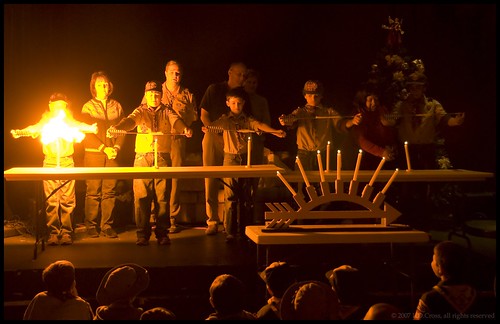
On the other hand, I remember the temple ceremony quite well and can probably recite the memorized parts but, of course, choose not to out of respect for what it is believed to mean by those who still participate in it. Somehow, the temple ceremony was different for me. I still saw it as somewhat arbitrary rites and phrases chosen to represent a deeper meaning and symbolic representation of gospel principles. I knew the ceremony had been changed over the years and that it may or may not be 100% dictated directly by God. But though most people are really weirded out by the ritual of it when they first go through, I wasn't. It seemed fine to me, not outlandish or odd. I'd been to a Catholic mass, I'd casually studied ancient religious traditions, I'd taken the stake temple prep class one-on-one, and I knew ritual was a way of engaging the adherent in a whole-body representation of the beliefs and principles taught, an interactive experience which went beyond mere spoken instruction to a more proactive kind of internalization of the ideas taught. I felt like the temple ceremony made me really think in an impacting way about what living the gospel was all about and why we make the commitments we do, and I felt like I was stepping up a bit more, manning up a bit more to a higher level of commitment than I had previously done if only by virtue of the fact that someone was now bothering to say, "Do you actively promise to dedicate yourself to X and Y?" and I was given the opportunity to explicitly state my intent and to follow through. Again, it wasn't the ritual or ceremony which mattered but what it represented, and I found personal motivation and meaning in it. Maybe part of what I appreciated about the temple as opposed to other ceremonies I'd been involved in or witnessed was that everything was very personal, not done with fanfare and individual recognition but sort of privately, one-on-one, as part of many who were doing the same rather than having any individual "recognition" beyond very private interactions I believed were meant to represent my direct relationship and connection with God.

It's understandable, I guess, from an emotional standpoint: men are supposed to want and deserve validation as 'men' (in the social belonging sense of identifying with those who generally share similar traits as distinct from other groups, even if there are amazing, good men whose qualities are not the same as the socially traditionally ideal template), rites of passage into manhood (social recognition that they are maturing and reaching socially or culturally defined milestones which traditionally entitle them to rights and privileges not previously offered, arbitrary though they may be), affirmation and recognition for their accomplishments and learned strengths (both to motivate future progress in him being recognized, assuming he's motivated by social recognition, and to motivate others to want to work to earn the same recognition through their own personal progress), etc.
This all came up because I was reading some material on Evergreen's web site, an article by a somewhat popular author within EG circles about masculine identity (one day, maybe I'll dig into my disagreement with such people's conclusions despite my agreement with many aspects of what they say). Within various sexual orientation change circles, there's a strong trend towards masculine identification exercises and what I think is regarded as a return to a sort of primal, tribal brotherhood notion. I find it all a bit overwrought still, as if those pushing it believe it's the only or best way to motivate and bring accountability into men's lives. I may not feel a drive to be involved with ritualistic or fraternal order groups, but I recognize that we all have formal and informal social systems and that, generally speaking, most people are happiest when they have social order and structure in their lives and tend to progress more steadily with accountability and incentive in place, including social recognition and reinforcement through formal ceremony. I also recognize that a key way values and principles have been maintained and preserved throughout history is through established ritual and symbolic ceremony, regardless of whether I think there are or should be better ways. So I don't have a problem with formalized or fraternal "orders" which engage in more or less formal "ritual" as long as they're recognized for what they are--a social mechanism and symbolic representation of underlying principles--and not given magical importance in and of themselves, used to emotionally manipulate those who aren't cognitively aware of why they feel so "affirmed" and "strengthened" but just assume that everything being taught to them is right because of how good it feels to them to be a part of some grand brotherhood of men, or given free license to commit grave errors of action and thought because their members fear to lose the camaraderie should they challenge the status quo.
Unfortunately, I think fraternal orders almost always have more of that influence than I'm comfortable with, and I don't believe the benefits typically outweigh that effect. But then, I'm not the kind of man they draw to begin with...
10 March 2011
You make me feel like a natural man
Listen, churchy chumps, stop using the "natural man" argument to conveniently bolster your hobby topics such as homosexuality. A natural heterosexual man falls in love with and wants to be with women. If your logic is that everything which feels "natural" is evil, or that I am supposed to overcome any arbitrarily selected "natural" inclination in order to prove my dedication and gain glory, then let's see straight people live single and celibate their whole lives to prove their willingness to overcome the "natural man".
And I'm not just talking about those people who, despite their desire and effort, "just don't find the right person," but everyone. I'm talking about everyone choosing to be single and rejecting opportunities which seem to be real shots at happy companionship with someone who'd want to build a family with them--someone with whom they're personally, ideologically, financially, and otherwise compatible, whose values they share, whom they respect, to whom they're attracted, for whom they have more than a "Christlike" lovin' feeling--only because the potential partner is the wrong gender. Because hey, their 'natural' appetites and lusts are not sufficient to build an eternal relationship. And showing your love for and obedience to God requires the willing sacrifice of all things. Then I'll start believing they understand what they're preaching.
While we're at it, let's have mothers refrain from ever holding their babies. That's a natural impulse, and one's faithfulness is proven by showing their willingness to subdue all earthly comforts and attachments, all natural appetites, to show their dedication to eternal growth rather than earthly comforts.
That's different, you say? Good, I agree it is. Because holding your baby is a divinely appointed good? Because God hasn't spoken, through what are believed to be divinely appointed mouthpieces, against holding your babies? Because research has shown that touch deprivation is psychologically and physically harmful for babies? Well OK, then, stick to the real issue and stop browbeating with accusations of not understanding that God requires difficult things of the faithful or asserting that only the proud reject an involved, personal God. Focus on the real issue of what you believe God's will to be, and get your misguided, arbitrarily applied "natural man is an enemy to God" and "doing what's harder brings rewards" motive-demeaning fluff out of my face. It's old and stinky.
28 February 2011
The truth about mormons...and heterosexuals...
I know some very vocal ex-mormons who speak at conferences to reveal the "truth" about Mormons, the seedy underbelly and corruption in Mormon culture behind the fluffy, feel-good masks of family-centrism and values-based living. They explain the dishonesty of the members, the hypocrisy rampant in leadership, the child abuse, the spouse abuse, the consumerism, the addiction to antidepressants, the truth about their beliefs which they don't publicly acknowledge because they know how outlandish they are. Yes, the truth about Mormons can only be revealed by one who has left that lifestyle and can be corroborated both by Mormon neighbors we've all heard complain about those very issues in their own culture and by their own leaders who reveal their underlying bigotry and lust for control over their disciples: it's so clearly confirmed that there's no denying the ex-mormons are on to something.
I have a few straight friends. Yes, I do. No, seriously. And some of them have told me the truth about straight people. They are thoroughly convinced that marriage is a ruse, a farce, a joke and can testify why from their own experience. Sure, they might acknowledge possible exceptions, but those are just better at fooling themselves. They talk about their past affairs and swinger parties with leaders and members of conservative and sexually puritanical churches and the testament that is to the falseness of their supposed values, are absolutely convinced that everyone is a total sexual freak and some just won't admit it and that everyone watches porn and masturbates daily whether they admit it or not, and they can tell you the "truth" about people based on their experience in a sex industry.
Yeah, you see my point yet? Why does anyone buy so very thoroughly into occasional accounts from "ex-gays" who loudly proclaim the "truth" they've uncovered about "the gay lifestyle" based on their experience cruising gay dating sites, or a couple of gay relationships, or twenty years as a prostitute and porn star, and think that story is somehow "the truth" because they've heard hints of similar complaints even from gay people themselves? And especially without really examining their credibility/sanity and checking the facts as they would anyone else criticizing a society or culture they are fond of? Come on, people!
01 February 2011
Overrated Experience (Memoirs of the never-therapized, Part 1)
Those who know me well would almost definitely say I don't err on the side of jumping into new experiences recklessly and without looking. They'd say I err on the side of analyzing objectively until opportunities pass. They'd most likely, possibly, perhaps, maybe be right. At least in many instances. But when something is important or exciting to me, I do most often act on it and engage with few expectations or preconceived notions about what the experience ought to be like. See, the thing I like about my approach is that I recognize that a) until you've experienced something firsthand, you can't know exactly what it's like to experience it, and b) most experiences are what you make of them, in the end. Therefore, I have few regrets and have had many positive experiences. But there are always those who say, "Well, you can have all the ideas about it you want, but unless you've tried it, you don't know, do you? So I invite you to come experience it and see for yourself if it works, or if it's right for you."
OK, cult-master, sure, I'll set aside any reservations to join your program. *wink* OK, so not everyone who says that is a cultist. But seriously, folks, this kind of argument can be said about most things. Does that mean you're going to engage in such things just because enough people 'testify' it has been good for them? What if most of your friends had tried something, and they all said they had good experiences, even if they don't agree with the ideas behind everything they experienced? Would you set aside concerns about what is attached to those experiences, or ideas that you believe to be wrong or destructive, in order to give a fair chance to the experience? Whether or not you would, should you?
I think most LDS people have their ideas about Pentecostalism and whether writhing on the floor screaming gibberish is really what the gifts of the Spirit are all about. But I've had friends who were Pentecostal who told me I had to experience it for myself to know the power and joy of spiritual gifts. They said you can't know until you trust the Spirit and experience it for yourself. I politely declined, thanks.
So what if most of your friends, whom you love and know to be really good people, are Pentecostal or keep joining Pentecostal churches? Some of them admit they don't know if it's all quite what it's cracked up to be, and they may have stopped going, but they really enjoyed the experience of going and have learned principles that have been helpful in their lives, and they've had emotional experiences that have really been cathartic for them. I think most LDS people believe that of course you can get caught up in a mob frenzy of emotion and can think it's some divine manifestation because you feel something powerful, but they'd be skeptical.
I think most LDS people would listen--but skeptically--when a Pentecostal tells them their spiritual gift experience was life-changing. I think most LDS people would acknowledge that maybe they had some spiritual experience and may have even learned something profound about themselves or about eternity but that surely writhing and screaming was incidental to that. They might even study the concept and read the scriptures to see if that's really what it's supposed to be like or if their understanding fits better. They might consider going to the Pentecostal's services just to say they did and being open to whatever comes, but they might be hesitant because if they don't experience a Pentecostal's idea of 'gifts of the Spirit', they know the Pentecostals will likely just think they weren't truly open to it, and they know it's not going to prove anything to them anyway, and they don't feel a need to try it for themselves. When their Pentecostal friends talk about what their church services do for them, how they fill them, the LDS person recognizes that they both believe in a need for God in their lives but either doesn't identify with those particular motivations or feels quite similarly fulfilled by their own church services. And if they did go and experience something, they couldn't be sure it wasn't the devil playing a trick on them.
Or maybe the LDS person agrees the Pentecostal may have had some kind of authentic experience, and they can respect that each person has their own experiences with the Spirit, but that needn't be everyone's experience, and they're still pretty skeptical about its authenticity, and one needn't go to a Pentecostal church to learn those things. But whatever the LDS person's reasons for not going, or not experiencing the gifts of the Spirit if they do go, to many of the Pentecostals, the LDS person has never dared to give God the chance to manifest himself in the most glorious ways. And maybe for some of the more open-minded among them, they shrug and say God works in different ways with each of us. Maybe they acknowledge that not everyone receives the same spiritual gifts, but the LDS person's own lack of that gift or reluctance to try bears no weight in whether the Pentecostals' experiences being overcome by the Spirit are completely authentic.
I do have to say that I don't personally regard the Pentecostal concept of spiritual gifts the same as I regard therapies of homosexuality (while I'm skeptical of both, I admittedly think Pentecostalism is more 'out there'), but what I'm trying to illustrate is the general thoughts and emotions around relative experiences. Perhaps in this sense, some promulgators or fans of certain therapies of homosexuality can relate to _my_ view of those therapies and exercises and understand that if I choose not to engage in them, it's not just about me being dismissive or not giving them a chance. But I do have to acknowledge that no, I have never been to a therapist. I'm pretty sure, though, that if I had, and I still arrived at the perspective I have today, there would be a supposed slew of reasons why my therapy was ineffective or why I didn't quite do it right or lacked the right support system. If it did change me in some significant way, I would be another loss to tragically unnecessary, damaging self-deception. Therefore, if I ever do try it, it will not be to prove anything to anyone who doesn't already think one way or another, because it wouldn't prove anything even if I intended it to, either way.
28 January 2011
Heteros do it too (and what I really think about most therapy of homosexuality), Part 6 of 6
Back to Part 5...
All else being equal, I would like to marry a man and raise children with him. But as much as I'd like to believe future generations won't have to face the choices or prejudices I have or that the dynamics and aspects of a male-male partnership and parenthood were exactly the same as those of male-female pairings, all else is just not equal, due to religion, social dynamics, biology, and legal ramifications, to name a few. Maybe same-sex couples aren't the first to wonder if society would ever accept them, but until things change, it's going to remain a big deal.
I also understand, firsthand, the reality of facing an apparent choice or tension between fighting for what the future can potentially be and saving myself the stress by living the best I can within the current bounds. Perhaps not everyone had the tenacity, energy, personal fortitude, or vision to be among the first inter-ethnic couples before society figured out such relationships can work, that accompanying differences of perspective can be beautifully and ably navigated for the personal growth of both parties, and that children raised by such couples are more stressed because of society's lack of understanding and acceptance of the couples. Perhaps not everyone can or even should be a social pioneer. So I reiterate that if certain practices work to make a same-sex attracted man's future marriage to a woman possible or current marriage better, and that's the option someone wants to pursue, as long as they're being honest and open and not hurting anyone, I want to support them in seeking happiness.
IMPORTANT NOTE: Yes, I wonder whether gay guys experience being "in love" as intensely or in as soul-animating a way with women as with guys (in at least 98.702% of cases, which statistic is great for those who find the right woman but not great for the rest), and I do think there are probably inherent, very personal and unique difficulties built into mixed-orientation marriages on top of the usual issues. But the more I expound on these ideas, the more I think it may sound like I'm saying my mixed-sex-married gay/SSA friends are living a lie for religious or social convenience, which is not what I mean to say. When it comes to people I know and love, I'm not comfortable making that assertion for their very personal, very sacred relationships. Let me be clear: I do not think my married friends are secretly unhappy or unfulfilled or fooling themselves about truly loving their spouses, I don't think their decision to marry a straight spouse is an inherently selfish decision, and I fully respect the straight spouse's right to choose. I believe that even the inherent additional challenges are often mitigated, if they've approached the marriage wisely, by an unusual level of communication and openness going into the marriage.
So I have this dilemma: I support and am happy for my friends who are married and having children as I've always dreamed of doing, and I believe they are genuinely happy, yet I believe that in most cases, were it not for religious and social paradigms which will likely change over hundreds of years, they would have chosen to be with someone of their same sex, but things haven't changed, or they do believe it's not allowed, or they did want biological children with a spouse of the opposite sex, so they had to act within their belief, and even if they wouldn't have chosen their spouse if same-sex relationships were an option, that doesn't detract from the fact that they're glad they did, and they wouldn't trade what they have for anything, and their spouses feel the same way...
I do think they're not "straight" or even, in any cases I personally know, truly 'bisexual', but since their sexual energy is now directed exclusively at their spouse of the opposite sex, and their thought processes on sexuality are far healthier than they used to be, I respect their right to reject labels which would downplay or distract from that focused love and whole-hearted dedication. I even think they are often more self-accepting than ever, which is something I think most anti-reparative people don't even recognize, let alone understand.
I fully hope for the success of my mixed-orientation married friends. In the cases of friends whose marriages are in challenging or rocky positions, especially where they have children, I fully hope they'll be able to work things out and have confidence that they can, in most cases, if they work at it and find the right ideas and support systems. Heteros have to weather tough times, too. The idea of having a wife of 6 years and two or three kids sounds pretty nice sometimes compared to facing a possible life of bachelorhood, I gotta be honest. So to my happily married friends, I say you have a beautiful, wonderful thing, and it may well be far better than anything you would have had either alone or with another man (or woman), and I hope it always remains so.
Marriage aside, though I think reparative theory is mostly bollocks, I still support my friends in doing what they believe works for their happiness, and I think some of the methods and practices can be very useful to many people in helping them identify and improve communication, cognition, and relationship skills and tools, in order to function as they wish to. I also think there are other ways to learn the same valuable lessons without the money, or the emotional baggage of theories of which I'm very skeptical, or the substitutes for cuddling explained as healing touch, or contrived "masculinity" (incidentally, some of my favorite decidedly hetero, self-assured, intelligent, and engaging friends are lacking popularly 'masculine' traits and don't seem bothered by it).
Did I think he was the smartest person I'd ever met? Nope. The most physically attractive? Nope. The funniest? Bah. The most accomplished? Who're we kidding? The most popular, athletic, confident, kind, refined, world-wise, happiest, or most creative and artistic? None of the above in the superlative, not even while I was the most emotionally invested, but all of the above to some degree or another in a combination I considered myself completely fortunate to find, and more than I felt I could ask for. He was (and, I imagine, very much is, in the most important ways) a great guy. I loved him because of who he was, even if a touch idealized, like heteros do.
But here's the real kicker, which probably requires more explanation than I have time to give right now (I know, why stop now, right?): I still consider, from time to time, going through reparative therapy or Journey Into Manhood. It's not because I actually think the theories are sound, it's not just to quell the "he hasn't even tried it himself" arguments (especially since I'd have to try 100% for at least 3 years to be considered a valid effort), and it's not just in case that whole eternal marriage thing is true. It's because if it could at least work to bring myself to a place where I'm more ready to consider or open to a heterosexual relationship, maybe it's worth wading through the muck to find the truths if it will open me up to more opportunities for happiness.
I don't know who else besides reparative types are willing to help a gay guy prepare for the challenges and dynamics of a relationship with a woman should that option become available and desirable. After all, if I can have a life without the social conflicts, denied rights, and inability to reproduce currently attached to same-sex pairings, maybe it's worth exploring the theories firsthand, giving them a real chance, and seeing if they apply more to my life than I ever realized while analyzing them from a bit of distance. Or maybe I just feel that broken, with nothing to lose...is that how they get us? Well, shoot...maybe I'm more free to 'be gotten', having gotten all of this off of my chest. Or maybe I have finally understood "desperation". Maybe I'm tired of defending myself and others and just want to quietly live my happy life...like heteros do...
Fin
27 January 2011
Heteros do it too (and what I really think about most therapy of homosexuality), Part 5
Back to Part 4...
What if we told straight men that going through only two or three years was "giving up" and that it may take many years for the changes to set in, that it would take finding the "right man", and that in the meantime, they had holding therapy and quality friendly time with women to fill their needs in healthy ways, but that they were not to date them? What if he were told that "infatuation" he feels for women on occasion is unimportant and but a hint of the lifelong intimacy he could find with a man? Would we be correct to believe that those who changed had proved that the process can and does work, that they are pioneers of change, or would it only prove that, given enough time and programming, you can convince people of just about anything? Does it even matter which it is as long as they feel 'happy' in the life they find?
The more clever purveyors of the theories insist same-sex attraction doesn't need to be cured: it needs to be fulfilled in healthy ways and is a very natural sign of the need for intimacy all men have. Nevermind that you could say something akin for hetero men who have failed to recognize or seek true intimacy with women in their lives, instead substituting sexual gratification or lust for real intimacy, perhaps partially because they've had no respected role models to teach them how. I suspect that for those who focus on developing their supposedly latent heterosexuality by building their masculine identity, these questions might be interesting but are disregarded as the musings of one who "hasn't experienced it firsthand".
Speaking of experiencing firsthand, I'd be interested to know what it's like on the other side of a mixed-orientation marriage. Maybe, if I lived in that society where same-sex relationships are the norm, I could date, fall in love with, and potentially marry a straight man who was trying to change and be homosexual or at least function in a same-sex relationship to live according to his beliefs. I've been attracted to a small handful of hetero guys, and the thought that one would be trying to change to be with me might be flattering and would probably increase my love for him more as I tried to be the kind of partner he needed to make our relationship work, saw him as needing my help and patience, and educated myself to know his needs and prepare for the challenges ahead. If he seemed really interested in me, enjoyed physical affection, even making out (the mechanics all worked, and he seemed to get passionate), we could talk in a meaningful way, he was honest and open with me...then maybe I'd try it.
I'm sitting here actually thinking I might, especially if I was feeling pretty fed up with trying to find the traits and values I wanted in a gay man. I mean, yeah, if an attractive straight guy who was "my type" and was trying hard to prepare himself for a meaningful same-sex relationship, and he had been sober from women for a while, I'd love to believe that was possible. And it wouldn't matter to me if many men had later gone on to fall back into being attracted to women and had affairs: I'd trust my man to do it right, to do what it takes. I tend to take the experiences of others into account and learn from those, but if I see discrepancies between my situation and theirs, I'm typically inclined to learn from those and adapt while trying it 'another way'. There's something very refreshing and intellectually stimulating about being part of a potentially pioneering group.
I might even acquiesce to my man engaging in holding therapy done safely and to quality time with girls in safe, group settings...eh, but there's where the analogy breaks down a bit for me because there's something inherently different about being with the guys, even other gay guys, where we just relate in ways a typical guy and girl don't. Gatherings of gay guys aren't big ol' orgies: they're just guys' nights, often with froofier food and less grunting, maybe.
Assuming Straightie cared deeply about me, appreciated me, even enjoyed sexual intimacy with me, and loved spending time with me, then I'd be interested in making it work, if I'd fallen for him, even without that sun igniting in his soul as I'd felt, or his heart freefalling, or him wanting to be sexual with me nearly as much as I would with him (in a soul-bonding way, not a simply down-and-dirty way). But I question whether I should deal with it or should have to, or anyone else, for that matter. It seems a bit sad, to me, for someone I care about to be in a relationship with someone who doesn't feel for them what I've now felt, if I know the person I care about has felt it for the other person. But is the less "in love" love really 'less' or just...different? Relationships with completely equal kinds and intensity of "love" are probably rare even among straight folk, and being open to experience it for myself, if the opportunity comes, without deciding ahead of time what kind of "love" I can or will feel. There's maybe no way to know until you've been there, right?
...Continue to Part 6.
23 January 2011
Heteros do it too (and what I really think about most therapy of homosexuality), Part 4
Back to Part 3
As for gay guys who "experience a decrease in homosexuality" after therapy, I know a lot of straight guys who had naive, unhealthy, or oversexualized attraction to women until they did this amazing thing as life, time, and experience taught them to do: mature. I imagine feeling like you wanna jump on every hot guy you see is downright troublesome at times. Tempering the overpowering sexual appetite aspect of attraction, or realizing that not every hottie is the one you want to be with forever, is refreshing and liberating. But I'm not sure it's that different from what straight men go through in their sexual and personal development.
Oh, and then there's that pesky issue of age. Funny how many guys I've known have experienced "diminished homosexuality" after their mid-twenties. Go fig, right? I wonder how my straight friends would feel about me calling their diminished sex drives and more mature perspectives on attraction and relationships "diminished heterosexuality"?
I wonder what straight men would think if you tried to tell them they fall for women because they want to internalize their traits, and that if they'd only become more sensitive and nurturing, learn to decorate and bake, and maybe even wear make-up once in a while, they'd feel a diminished attraction to women, having assumed those qualities for themselves and therefore not needing to seek them in sexual gratification.
Maybe they just need some healthy, non-sexual touch with mother-figure women (some who are young and very attractive) in a safely monitored environment, to get the intimacy they really want, and it's OK to get an erection as long as they don't use it and that they'll eventually get erect less and less as they practice this holding therapy more often, and the healing influence starts to hold sway. Maybe they'll never stop going to holding therapy, but as long as it still feels centering and grounding to them, and nothing sexual happens, it's all good. Don't let them think it's just about connecting on a trusting level with another human being. It's about healing wounds.
And they need to learn to overcome their nervousness in women's lockerrooms by going and just talking (without flirting) with the women in the lockerroom. If you straight men will approach a woman as a friend, constantly downplaying the perverse sexual attraction and reminding yourself that she's a daughter of God and a fellow human being not to be objectified, the sexual tension is diminished, and you'll find that she is a person you can relate to and be friends with rather than some Venus you want to possess.
Actually, there might be more healthy mixed-sex relationships if more men thought like that. Of course, if healthy mixed-sex relationships were viewed as wrong, we'd need more than that healthier approach to relationships to quell them and open straight men up to same-sex pairing because unless the woman he becomes friends with is a lesbian, one or the other of them is likely to crack and get all romantic at some point. So we should encourage friendships with lesbians, ideally. But for some reason, most straight men undergoing this therapy prefer straight women. We can deal with that, maybe.
Perhaps if they go shopping with women and do womanly things, they will learn to relate to women on a more natural, personal level rather than objectifying them as sexual idols. I'd bet certain men going through such programs would proclaim a "diminishment" of their heterosexual attraction as they learned to identify with rather than seek to possess women. Maybe they'd even experience an increased curiosity in men if you could raise them since birth in a world in which the bulk of society were built around facilitating and nurturing monogamous same-sex partnerships as favorable over other relationships. And if their family disapproved of them dating women, and laws didn't protect mixed-sex relationships, and some people got beat up or killed for being heterosexual, that might help motivate them to develop same-sex feelings even further. Tah-dah! They're changed to homosexual! Some of them, anyway. ...Or at least adapting consciously and behaviorally to what works best for their situation, upbringing, social and family life, legal status, and sense of security, even if it's not what they would have chosen had things been different.
And for those straight men who were able to find happiness in same-sex partnerships, why should they have to call that anything other than the hard-earned change it was? Why should they be blamed for the straights who couldn't go gay? Sure, there are many who get over their "experiment", realize they've been heterosexual all along and were just convincing themselves, and it breaks homes and tears apart (adopted) families, but their failures or self-deceptions are not the problem of the still-happily-married-to-a-man formerly-straight man who has shed the label "straight" because it doesn't seem appropriate for a guy who deeply loves his husband and is living a gay lifestyle and wouldn't have it any other way after 15 years of commitment, investment, intimacy, and happy memories. Ha, taking it too far? OK, retreating from the completely abstractly theoretical...
I think we're generally or often attracted to people whose traits complement and fulfill ours. I think that's why an "effeminate" (exhibits an unusual abundance of traits and/or behaviors/expressions more commonly exhibited by females of the species) but straight man is better off marrying a more "masculine" woman than trying to act more like other men and finding the ideal "feminine" wife to make himself feel more "masculine". One relationship is built on frank assessment of strengths and complementarity, while the other is built on creating a contrived persona and finding a complement to that facade. Yes, I said contrived because even though I do believe we can each develop certain traits and strengthen our weaknesses and adapt our behaviors, I do think there's something "right" about identifying one's core personality and innate (not needing constant effort and refinement) strengths and finding someone who complements THOSE. In that way, both people are reinforced in the best way, finding a true complement to their weaknesses and building and balancing each other accordingly. But maybe not everyone can afford that. Maybe I can't. Maybe there aren't enough people in the world who truly complement me, so I can either hold out for what I want and die single defending that conviction or put on the appearance of strengths and, as Tim Gunn says, "make it work", and see if a masterpiece doesn't come of it.
I guess part of what I'm getting at is that there are many gay men who, when they hear the prepackaged explanations about how gay men are attracted to men because of their ideal masculine traits, think, "Oh my gosh! That's so me! I do that! I've always felt like I lacked confidence, so I've idolized guys who had it! I've never been good at sports, so I've been attracted to athletic guys!" Well aside from those kinds of traits being generally attractive to most people, male or female, gay or straight, there's something very natural about being attracted to someone with traits that complement yours or might help you strengthen weaker aspects of your personality. Abundant romantic versions of this dynamic aside, there's no shortage of movies about the small, wimpy nerd befriending the strong, popular guy and learning from him while discovering he has a thing or two to teach him as well, and they become best friends because they grow from that friendship. I think your average therapy client regards that as how it should be, with his attraction being a perversion of that desire, and I think that's bullcrap. A lot of gay guys experience it because a lot of guys in general experience it. Same with the daddy issues. The gay guys just also had all this other stuff mixed in, not because it was the result of it but because it's just how it was. I guess it's a chicken and egg scenario, and everyone has to decide for himself whether he believes his homosexuality was really born of masculine detachment or whether he was experiencing a very normal growing pain with the added element of homosexuality from the beginning, exacerbating the feelings of being different, and not the other way around.
Continue to Part 5...
Heteros do it too (and what I really think about most therapy of homosexuality), Part 3
Back to Part 2.
I'd guess some same-sex spouses or partners experience a lack of infatuation to an extent, too, maybe even fully. Would gay activists decry that relationship just as much as a mixed-orientation relationship based on a lack of euphoria, intense but unearned trust, and/or the feeling of walking on clouds and feeling deliriously happy? Would they decry it if the partners had to work on the sexual aspect of their relationship? Might they just as well have married people of the opposite sex if they were going to forgo the whole "euphoria" thing anyway? Or is that a specious question because gay men still experience infatuation even with their wives? Or is it possible to be "in love" in a way unique to pair-bonding without anything like the infatuation or euphoric feeling? Is that all just insignificant, doped up brain chemistry in the end? Is being in a committed, fulfilling relationship really not even about being in love? All else being equal, if you knew you could choose to have a committed, fulfilling relationship with or without being "in love" in this euphoric or deeply emotional sense, would you choose to go without? To you straight people who tell me it's not that important anyway, would you have married your spouse if it hadn't been for those feelings? Whether or not you think you should have, would you have? What stopped you from marrying your opposite-sex best friend for whom you had no such feelings? Shouldn't you have done that?
I think straight people generally do have the "in love" feelings, at least in the beginning of their relationship, and throughout, if they work to maintain them. I also think they take them for granted, and it does wane with time, although some brain activity research indicates that long-term couples tend to still dope up each other's brains quite nicely. Is a chemical reaction in the brain something to base a lifetime decision on? No, I don't think it is. Is it something to reject just because it's chemical, even when other important factors line up? I think you'd be a fool to. If the match is a good one, and the values and commitment line up, then that doped up brain is a total bonus, and who wouldn't want that?! I believe rejecting the euphoria as if it's proof of shallowness of affection is what many gay men are doing when they "explain away" their attractions to other men. Whether acting on those attractions lines up with their values and beliefs is another question: I just wish more such men would call a spade a spade, admit the authenticity of the experience, and see that they needn't decimate their concept and experience of being in love in order to justify their decision to live an alternative lifestyle and seek love in a form more compliant with their beliefs.
Mind you, I think many gay men do idolize the "objects" of their attraction, thinking them to be everything they'd want in a man...or, as the reparatives narrate it, everything they wish to be. I think many straight men "idolize" the women they're attracted to, as well, seeing the ideal feminine (often rooted in evolutionarily biological preferences reinforced by societal norms and structure) in them even well beyond reality until something snaps sense into them, often well after it's likely to make any difference in their love. I wish there were an accurate way to get into the mind of any given gay man and see his attractions for men, and the traits he finds attractive, and then get into the mind of a straight man and his attractions for women and see if they're patently differently motivated in a quantifiable way.
Let's pretend, for a nutty moment, that some people are truly, physiologically wired, for whatever reasons (environmental, genetic, whatever the triggers for that wiring) to fall for people of the same sex. Now, why wouldn't a guy be attracted to guys who represent ideal men? Why wouldn't any given same-sex-wired guy be attracted to guys similar to those hetero women are attracted to? And why wouldn't a guy who is truly primarily attracted on a personal, not romantic or sexual, level of admiration or aspiration to a guy who also happens to be physically attractive find it difficult to sort out which kind of attraction he's dealing with? Don't hetero girls also have a tendency to think they're in love with the "perfect guy" when in reality they just really look up to them but wouldn't necessarily pair well with him or would realize, if they started dating him, that they're not actually that interested after all but were idealizing him based on admirable hobby traits? I know many women who have gone through that. If certain parts of gay guys' inner workings resemble the inner workings of the average female of the species, as some brain structure research suggests on at least some level, wouldn't it make sense for them to experience some similar processes?
Continue to Part 4...
22 January 2011
Heteros do it too (and what I really think about most therapy of homosexuality), Part 2
Back to Part 1.
That "in love" feeling is proclaimed by some to be unimportant in a "real" relationship since it eventually fades anyway, which is actually a pretty key thing for a woman-marrying gay man to accept because as I understand it, in most cases, a gay man isn't going to have the same euphoric "in love" phenomenon with a woman as he likely would with a man of equal caliber and compatibility. That's not to downplay such a relationship: whatever I may think "most" relationships have or start with, I know at least one or two happily married, completely hetero couples in which at least one partner confesses to never having had the butterflies they thought you're supposed to have, but that it's always been something more. Maybe that means they didn't have the "in love" feeling, or maybe it means they just describe it differently, or kept it in check differently, or something.
As I write this, something's dawned on me that I'd forgotten. I actually wondered, from very early while we were dating, if I was maybe not as giddy as he might be, not quite as carried away, in a sense, as one might expect. Of course, there were also times early on when I actually thought he was disinterested and "over it" when I knew very well I was not. I just knew I was experiencing something different from what I'd felt with other guys, something more like a mix of them and what I'd felt with a couple of girls...and I feared that he was only experiencing...his first reciprocated crush. I didn't long to have him with me every moment we were apart. Instead, I looked forward to seeing him again but carried on with my daily life as usual. As time went on, and we grew closer, I felt him with me rather than feeling a void when he wasn't around. Even now, I feel like a part of me went with him in a way, and the space was filled with something he gave me, or something our relationship gave me. How corny is that? I didn't fantasize and daydream like a Disney princess; I took it a day at a time. I did just about collapse on buckling knees and shout for joy when he called me asking to officially "date" me, feeling like a new sun was igniting inside of me. I remember thinking, in that moment, that there was no way to describe in words what I was feeling or how beautiful and powerful it was, that it was like the entire cosmos was tuned to animate my soul. So yeah, that might be carried away, especially after only a month or so of friendship. And once, in an intimate and admittedly sort of 'passionate' moment (in a totally PG-rated way for you folks trying to spice this up to quell your "excessive gushing" gag reflex), an admission which concedes the possibility of influential chemistry, there was a pause and tender moment in which we looked into each other's eyes, and tears unexpectedly fell from my eyes in a happy moment because of the exquisite joy of the mere idea of our relationship, with all of its quirks and qualities, lasting indefinitely colliding with the exquisite sorrow at the probability that he would not be ready to pursue that, and I would have to let him go without finding out where it could lead. That emotion may have been as much about a formerly abstract concept really becoming a present reality for the first time as it was about him personally, and I knew it. But I also saw him as a beautiful person, the kind of person I'd want to be with, possibly the person I wanted to be with, and I was torn to tears by the tension between wanting to give myself over in a freefall to find out but believing it wouldn't be fair to him, and realizing I was afraid to take that risk but knew I was on the brink. He asked me, in that moment, to let him in, to share what I was thinking, as he gently combed my hair with his fingers, pulling me in with that familiar, encompassing, gravitational gaze. I loved him the more for it and told him, "Someday, but not now." Well! *shaking head vigorously* How's that for a tangent? Where was I? Right: But I didn't walk on air every time we spent time together. I did after the first night, but it quickly became...something more steady, more filling, more secure, more meaningful than twitterpation.
So is that what they're talking about when they say they didn't have all the giddiness and butterflies? Because if that's it, wow, it makes complete sense! ...I have no way of knowing, since I can't experience what someone else has. And then there's the question: "How authentic could all of those feelings have been after only a couple of months of friendship and dating? Clearly, it was more emotional than rational." Maybe so. But had we stayed together and proven those feelings, that wouldn't be in question. Had we been a straight couple who became sealed together for time and all eternity, those moments would be considered beautiful testaments of our love and dedication for each other, seeds we planted and nourished by dedication, commitment, and mutual respect and appreciation.
Well, whatever the "butterflies" are, and whether infatuation is present early on in most relationships, "most" relationships fail, butterflies or not, and arranged marriages in some cultures have incredible endurance rates, with many couples in arranged marriages saying they're fully happy and don't believe in the necessity of all of this western romanticizing we do. Either way, there's something beautiful about choosing to be with someone even without the euphoria, or the butterflies, or infatuation "stage" because in that case, it's clearly not just a hormonal insanity, and more likely a real connection, appreciation, and attraction of a more enduring kind. But all else being equal, if I can choose to have that real connection along with what I felt for him or instead with what I've felt for those to whom I wasn't romantically attracted but with whom I've had enduring friendships, I know which one I would choose. That's if that's actually an option.
Continue to Part 3...
21 January 2011
Heteros do it too (and what I really think about most therapy of homosexuality), Part 1
I loved him. I did not idolize him. But I may have idealized certain traits in my mind. This probable idealization or possible misperception of his traits which never had a chance to be validated or debunked does not mean my love was only a symptom of an inferior and illusory infatuation due to some developmental hiccup. I don't believe it was the result of the sexualization of masculine traits I wanted to possess for myself but wasn't manning up enough to acquire but instead lusted after through a copout sexual desire. I think it means I was...um...falling in love. And I knew it. And I knew the risks. And I'm certain nobody would question what I felt and expressed had he been a woman and I a straight dude. I'm pretty sure I saw him for who he was and was willing to explore "us", including the bumps I saw in the road ahead. Maybe I was nothing but a mirage to him, a symptom of a "problem", but he was much more to me: awkward at times, naive sometimes, inexperienced in certain ways, rebellious in others, yes, and other things which weren't entirely attractive, but so much more importantly, he was kind, sincere, fun, silly, sensitive, sweet, thoughtful, attentive, open-minded, humble, happy, bright-eyed, curious, playful, responsible, loving, family-oriented, affectionate, communicative, respectful, honest...not perfectly so on any of these, but a beautiful combination of them. Maybe I even idealized some of that, but I am so grateful to have had even a short time with him in that kind of relationship.
Having blinders or rose-colored glasses is a very real, explainable phenomenon associated with physiology like dopamine in the brain. Healthy hetero people have to keep it in check just like gay people, but when it's happening in a gay man, he's told by some that it's a symptom of detached masculinity or some horse manure along those lines primarily because it's directed at the wrong gender. I suspect most of those who buy into this idea find it easy to do so because they're still in their gay adolescence, learning the ins and outs of that kind of relationship far later than most people have. It's pretty easy to dismiss your first crush or fling as something silly, especially if you've never given it a chance to mature because you believed it shouldn't be allowed to in the first place, somewhat like neglecting a plant and then calling it weak because it dies.
Heteros have fumbling, unsatisfying, disappointing, or romanticized relationships too. They just usually get much of it out of the way and learn to identify them in actual adolescence. Yay for them. Head start. Those of us who say, "Oh crap, it's not a phase," in our mid-to-late twenties are starting a bit late, even if we've had relationships with members of the opposite sex in the past. I can't speak for anyone else, but even though my relationships with girls have often turned out to be meaningful for longer-term (probably partially because it's easier to maintain a friendship when one or the other isn't emotionally vulnerable, partially because I'm more often adept at choosing matching character when my hormones don't get in the way, partially because women are, I think, and for whatever reason, often better at the kind of intimacy I value), the vulnerability and emotional dynamic with guys has been a completely different ballgame, something much more intense, animating, and satisfying in additional ways, rather than friendly and respectfully attracted with flirtation and a hint of romantic affection.
Continue to Part 2...
10 December 2010
Private
I'm seriously considering going private for a time. At the very least, going on hiatus for a while.
I still have so much to say:
I'm feeling a desire to just take it all private, visible to only myself. If I did write more about all of this, I'd want to give it due attention and do it justice. And readers would surely react and misconstrue and jump to conclusions and ask questions and challenge and confirm, which would leave me wanting to clarify and refine and tease apart emotion from reason, conviction from suspicion, and questions from assertions...and even after all of that, it all seems so pointless sometimes that I shrug and say to the world, "You do your thing, and I'll do mine."
I see blogs which appeal to more lusty appetites gain zealous followers quickly, while my favorites are generally not hugely popular, being not nearly sensational or provocative enough, nor party-line-toeing enough, to appeal to the comforted masses. Maybe I prefer that kind of company though. Maybe I want to get away from the mobs anyway, despite missing certain aspects of the community they tend to carry. In any case, it seems this little blog most likely won't make any lasting, actual difference outside of me, and I have been questioning whether my energy would be better redirected as I evaluate my probably nearly half-over vital life. Please, no bites on supposed fishing line here, I'm talking about what's best for me, not lamenting and insisting I'll go eat worms.
In many ways, I've been closing chapters of my life, and as I've done so, I've hit a realization: I'm not sure I'm interested in writing the next chapters of this book. I may be more interested in starting another book altogether and setting this one aside for now, maybe coming back to it someday. If I'm honest with myself, I probably can't completely set it aside. I'll probably just journal instead of publish for a while. Maybe I'll never compile all of these thoughts into something cohesive to publish in book form. Maybe I'll quit blogging with the hopes that this little, mostly undiscovered nook of cyberspace will become a compendium of my journey which might positively impact at least one person in some non-negligible way. Maybe I'll keep blogging as usual with or without a hiatus. Yeah, probably that last option, with a little of the others mixed in.
I'm looking forward to a future "download" feature to install in my brain. I hope neuroscience advances quickly to enable that. That'll be fun. But for now, even if for only a symbolic night or two, I'm taking a vacation...I think...ah, heck. All I know for sure is that I'm going to slip into a deep sleep induced by the powers of prescription cough syrup. Ah, yes, I feel it. That "good luck waking up sooner than 147 hours from now" feeling as Vienna Teng lulls me. Mmm...
Note from the next morning: that was trippy...as I listened to some of my favorite Vienna Teng bedtime songs, like 'Lullabye for a Stormy Night' and 'The Last Snowfall', it was like I was living in slow motion, like the short songs which always end too soon were extended far beyond their usual length, and it was so satisfying. Perhaps there are ways to slow down life without codeine... :-)
I still have so much to say:
- about my belief that most reparative therapy is unnecessarily lobotomizing, cleverly packaged, subtly emotionally manipulative mind tricks with good intentions,
- about my continuing support for those who choose alternative-alternative lifestyles such as mixed-orientation marriages as long as they're being honest with themselves and their spouses (yes, maybe even to a level not required of other couples because of the circumstances and assumed risks),
- about my own persisting desire to have a wife and kids,
- about my skepticism that I can do so without being a bit selfish and/or losing myself (sorry, friends, I haven't liked the all of changes I've seen in those who have taken that route, even if they believe they are as happy as anyone), but still wondering whether losing myself a little might be worth the trade-off, and questioning whether I'm fully engaged in the relationship if I've tucked part of myself under the rug, but figuring maybe that's my spouse's choice to make, and reminding myself maybe I wouldn't lose myself at all or would but could also find lost parts of myself and maybe I can't know any of this until I try,
- about my questions as to whether the only truly selfless path, for me, is to never have children,
- about my theory that gay male culture began as a snowball of men who, because of the outright rejection of all homosexuality back in the day, left their jobs, families, and religions, and therefore had nothing left to lose and threw out the baby with the bathwater regarding commitment in relationships and standards of behavior, how gender roles and male physiology may come into play to magnify seed-sowing or gratification behavior without the tempering influence of women (who have higher risk of investment in promiscuity), and how there seems to be a trend, slow as it may be, towards stabilization and maturation of gay culture in general as it re-assimilates certain values and relationship perspectives,
- about my theory that gender constructs are malleable and based primarily on what traits happen to be generally predominantly found among males or females of our own species and how pockets of nature challenge notions of inherently "female" or "male" roles, and whether we can actually tweak what is considered "masculine" and "feminine" evolutionarily by adjustments to social/cultural ideas around gender and who ends up pairing off and having offspring, and whether education of those concepts might naturally, gently push the population in that direction, and ethical questions around what I guess I'd call social engineering,
- about wondering who my reader from a particular government office is, or the one from some studio in Cali,
- about my increasing belief that there is meaning, beauty, and optimism in life and the universe with or without a god or gods,
- about what might become if our actual, physical communities and 'tribes' reassumed the roles which religion clearly dominates now and therefore seems uniquely positioned to provide but isn't necessarily inherently so but might be because of its acute and structured appeal to supernal emotion and ideation,
- about how I'm full of crap trying to sound intelligent by forming sentences like the last one and how more intellectually honed people readily perceive it,
- about what "light in your eyes" is really all about and how I think it has little to do with "having the Spirit" based on my experience and observation,
- about my increasing belief that the church is useful in a way and a great model of community in some key ways but doctrinally arbitrary/fantastical and possibly irreparably socially ill in others,
- about my love of fireplaces and how that might be one of the top three elements I want in my home,
- about my current, somewhat surprising happiness despite enormous stress and possibly very limited prospects for the future,
- about my somewhat whimsical desire to go completely off the radar for a year and work as a baker in Italy or join some Spanish commune,
- about the hot cop I saw at a Panda Express on Monday and how I figured coming on to an ambiguous police officer having lunch with his police officer friends was probably not the wisest thing in the world to do (a wise friend pointed out it's generally unwise to come on to men with guns),
- about the frank and clarifying conversation I had with someone close to me about the gay marriage debate and how I realized there is probably no true reconciliation to be reached on the issue on a legal/political level, even if I still believe there should be, because it's fundamentally about the subjective definition of marriage and whether someone believes God and predominant thought define it or that it is only defined as it is because of limited, flawed, evolving understanding,
- about the conversation I had with a pretty typical male on the subject of whether physical violence is an appropriate response to unwanted advances and how the genders of the one coming on and the one being come on to affect the appropriateness of the response, and how I think tempering gut reactions (physical violence and disgust when a man comes on to a straight man in no more offensive a way than a woman might) with conscious processing is as clear an example of 'overcoming the natural man' as any,
- about my frustration with having to constantly cater to the "majority" and their constructs, accept their lack of vision (yes, I know how arrogant saying this may seem) as somehow authoritative just because they think or were wired more like each other than I do/am like them, and abide by their change-resistant rules for the sake of arbitrary stability at the expense of progress when I think the balance between stability and progress has room to be tilted toward progress in many aspects,
- about family dynamics and some realizations I've had regarding how certain family members' outspoken views throughout my life have significantly colored my own self-perceptions and my perceptions of others growing up,
- about how belief may come down to choosing what to believe rather than figuring out what is concrete truth and why not to choose the pretty stories (even if they come with some ugly ones) just in case they're true or why someone would choose to believe in a godless universe and how it's not the bleak, meaningless perspective I, for one, always thought it was,
- about the sustainability of morality not based on authoritarian deity and arbitrary constructs/dogma,
- about discovering, with a fun smirk, that a long-time crush-from-afar was not one-directional, even though clearly nothing is going to be done about it,
- about tying up loose ends, moving on, and feeling good about it,
- about my favorite recently watched movies and snippets of music,
- about the joys of public transportation and quirky bus stories,
- about wanting to find more between the closeted angst and hypocritical repression of Utah gay men hopelessly attached to their stifling religious community and beholden to family expectations and the swishing and brazen flippancy of Seattle gay men hopelessly attached to their licentious sexuality community and withering in empty individualism,
- about the moment my friend's toddler son sweetly touched the cheek of a guy I was dating and cared about very much when he found the two of us bundled in a blanket together at my friend's house, the flicker of hope I smiled at that maybe he'd warm up to the idea of having kids someday (with whomever, not necessarily with me, though I admit I kinda liked the idea), and how--when I asked if my friend was OK with us being affectionate around the boy (just leaning on each other)--my friend said it was good for him to be exposed to us,
- about my prayer experiments from years ago,
- about my story of experiences with homosexuality and with the church, told as two separate but connected stories, from childhood to now, in several audio installments, some of which I already recorded months ago,
- about feeling like I've had a good love and not feeling the need to try to top it or supplant it for now because despite the pain and anger around how it ended, I still feel satisfied and filled, maybe permanently changed, and at least for now content in a way I'm not sure I can describe, and it's time to focus on other things for now,
- about my mission journal and the ways it all fits, maybe even better, within a completely different perspective than I had then, and the code I wrote into it in case someone else read it and I didn't want them to know what was hidden behind the words, and what it has reminded me of that I'd forgotten and can't honestly ignore,
- about the book I'm reading, The Happiness Hypothesis, and the many ideas I'm loving from it which reflect and support my own realizations and questions and the questions it has magnified about my own probably kinked psyche,
- about the fact that...I might take that hypothetical pill if it were offered, after all, but without shame...
- ...about this and more, far too much to try to explain fully here and now.
I'm feeling a desire to just take it all private, visible to only myself. If I did write more about all of this, I'd want to give it due attention and do it justice. And readers would surely react and misconstrue and jump to conclusions and ask questions and challenge and confirm, which would leave me wanting to clarify and refine and tease apart emotion from reason, conviction from suspicion, and questions from assertions...and even after all of that, it all seems so pointless sometimes that I shrug and say to the world, "You do your thing, and I'll do mine."
I see blogs which appeal to more lusty appetites gain zealous followers quickly, while my favorites are generally not hugely popular, being not nearly sensational or provocative enough, nor party-line-toeing enough, to appeal to the comforted masses. Maybe I prefer that kind of company though. Maybe I want to get away from the mobs anyway, despite missing certain aspects of the community they tend to carry. In any case, it seems this little blog most likely won't make any lasting, actual difference outside of me, and I have been questioning whether my energy would be better redirected as I evaluate my probably nearly half-over vital life. Please, no bites on supposed fishing line here, I'm talking about what's best for me, not lamenting and insisting I'll go eat worms.
In many ways, I've been closing chapters of my life, and as I've done so, I've hit a realization: I'm not sure I'm interested in writing the next chapters of this book. I may be more interested in starting another book altogether and setting this one aside for now, maybe coming back to it someday. If I'm honest with myself, I probably can't completely set it aside. I'll probably just journal instead of publish for a while. Maybe I'll never compile all of these thoughts into something cohesive to publish in book form. Maybe I'll quit blogging with the hopes that this little, mostly undiscovered nook of cyberspace will become a compendium of my journey which might positively impact at least one person in some non-negligible way. Maybe I'll keep blogging as usual with or without a hiatus. Yeah, probably that last option, with a little of the others mixed in.
I'm looking forward to a future "download" feature to install in my brain. I hope neuroscience advances quickly to enable that. That'll be fun. But for now, even if for only a symbolic night or two, I'm taking a vacation...I think...ah, heck. All I know for sure is that I'm going to slip into a deep sleep induced by the powers of prescription cough syrup. Ah, yes, I feel it. That "good luck waking up sooner than 147 hours from now" feeling as Vienna Teng lulls me. Mmm...
Note from the next morning: that was trippy...as I listened to some of my favorite Vienna Teng bedtime songs, like 'Lullabye for a Stormy Night' and 'The Last Snowfall', it was like I was living in slow motion, like the short songs which always end too soon were extended far beyond their usual length, and it was so satisfying. Perhaps there are ways to slow down life without codeine... :-)
Subscribe to:
Posts (Atom)